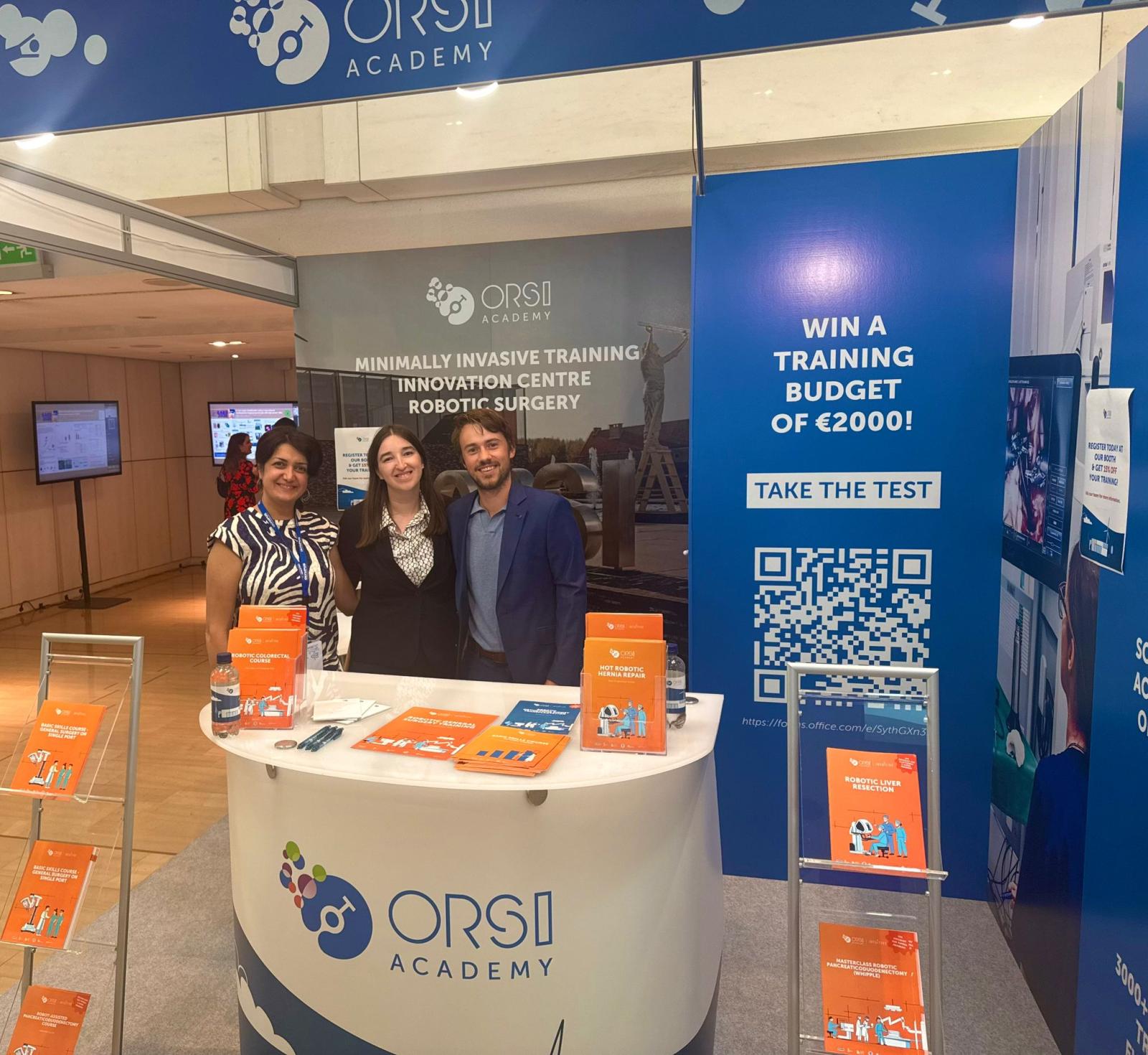
Orsi Academy was present at the EAES Congress in Athens, where surgeons, fellows, educators and industry partners gathered to exchange insights on the future of minimally invasive and robotic surgery.
For Orsi Academy, EAES is more than an opportunity to present our training programmes. It is a place to contribute to a broader and increasingly urgent conversation: how can surgical innovation be implemented safely, responsibly and with measurable impact for patients?
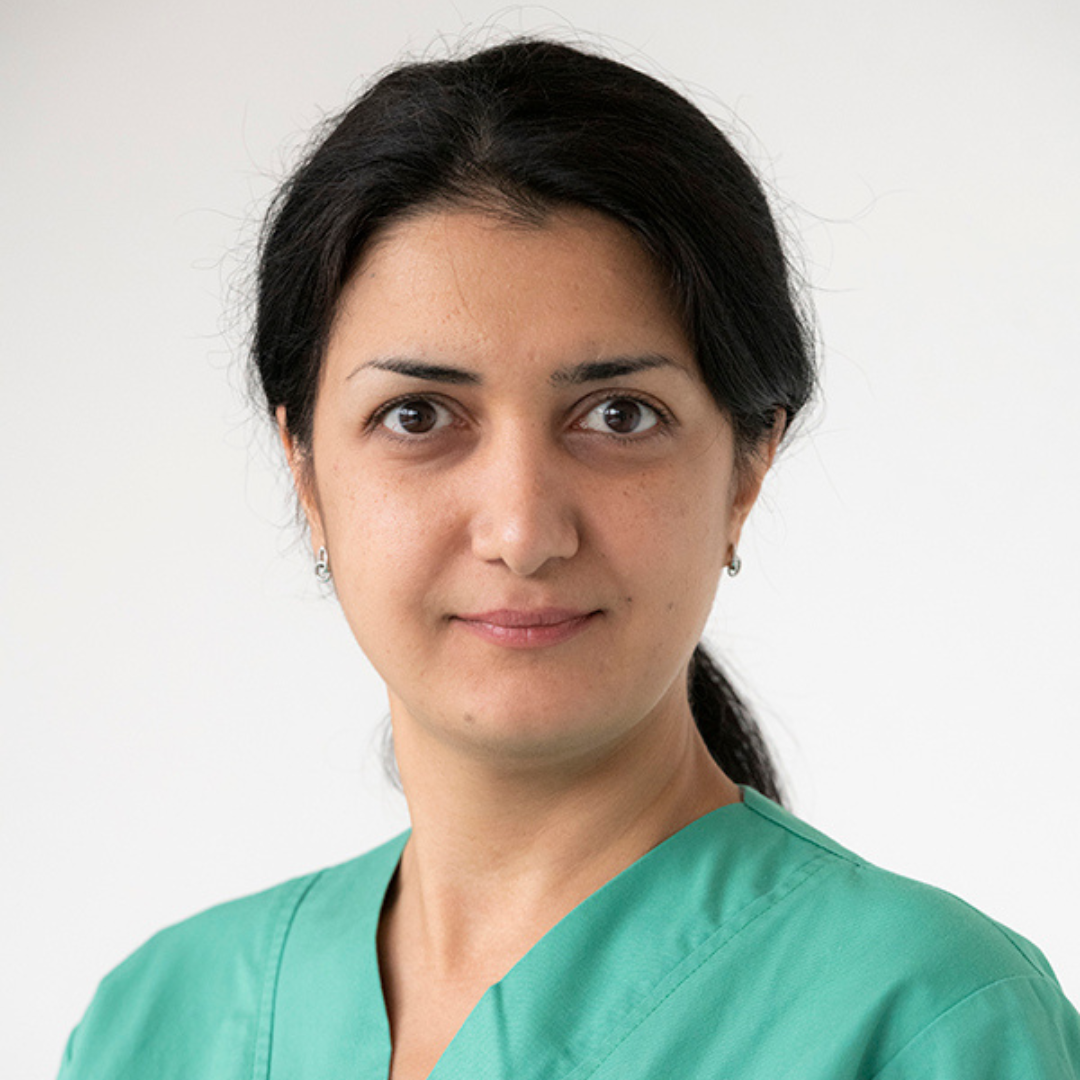
That question was central to the invited lecture delivered by Dr. Niki Rashidian, Co-Director Education at Orsi Academy. Her presentation, titled “What’s new in pancreatic surgery?”, explored the latest developments in one of the most complex fields within general surgery.
Robotic pancreatic surgery is gaining ground
Pancreatic surgery remains technically demanding. It requires precision, strong anatomical knowledge, careful decision-making and excellent team coordination. As robotic platforms continue to evolve, evidence supporting robotic pancreatic surgery is also growing.
Dr. Rashidian highlighted that, in selected patients and within the right clinical setting, robotic approaches can support the further development of pancreatic surgery. But the key message was clear: technology should never be the goal in itself.
Robotic innovation only creates value when implementation is safe, patient selection is appropriate and outcomes are measured consistently.
Safe implementation starts with training
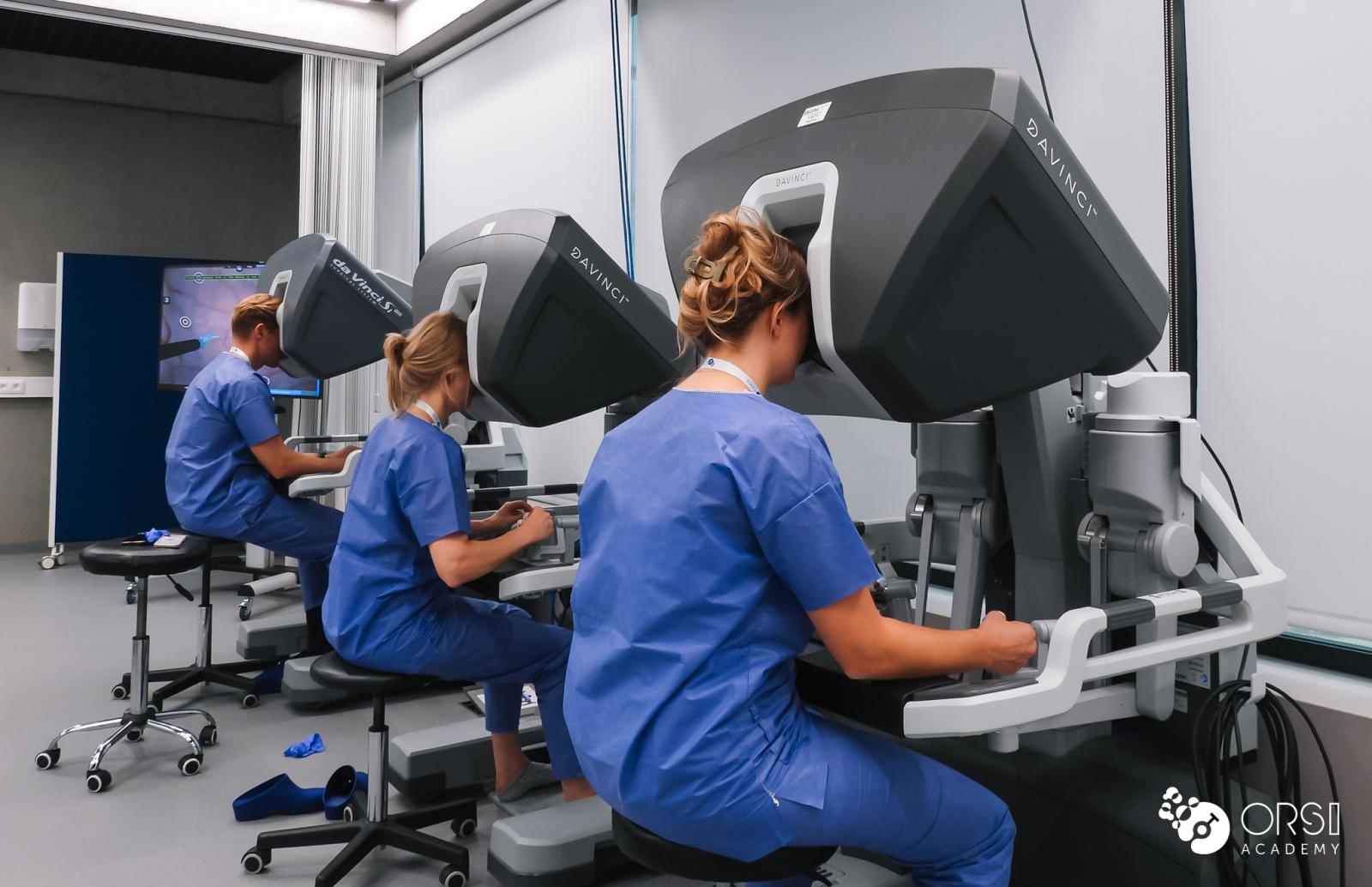
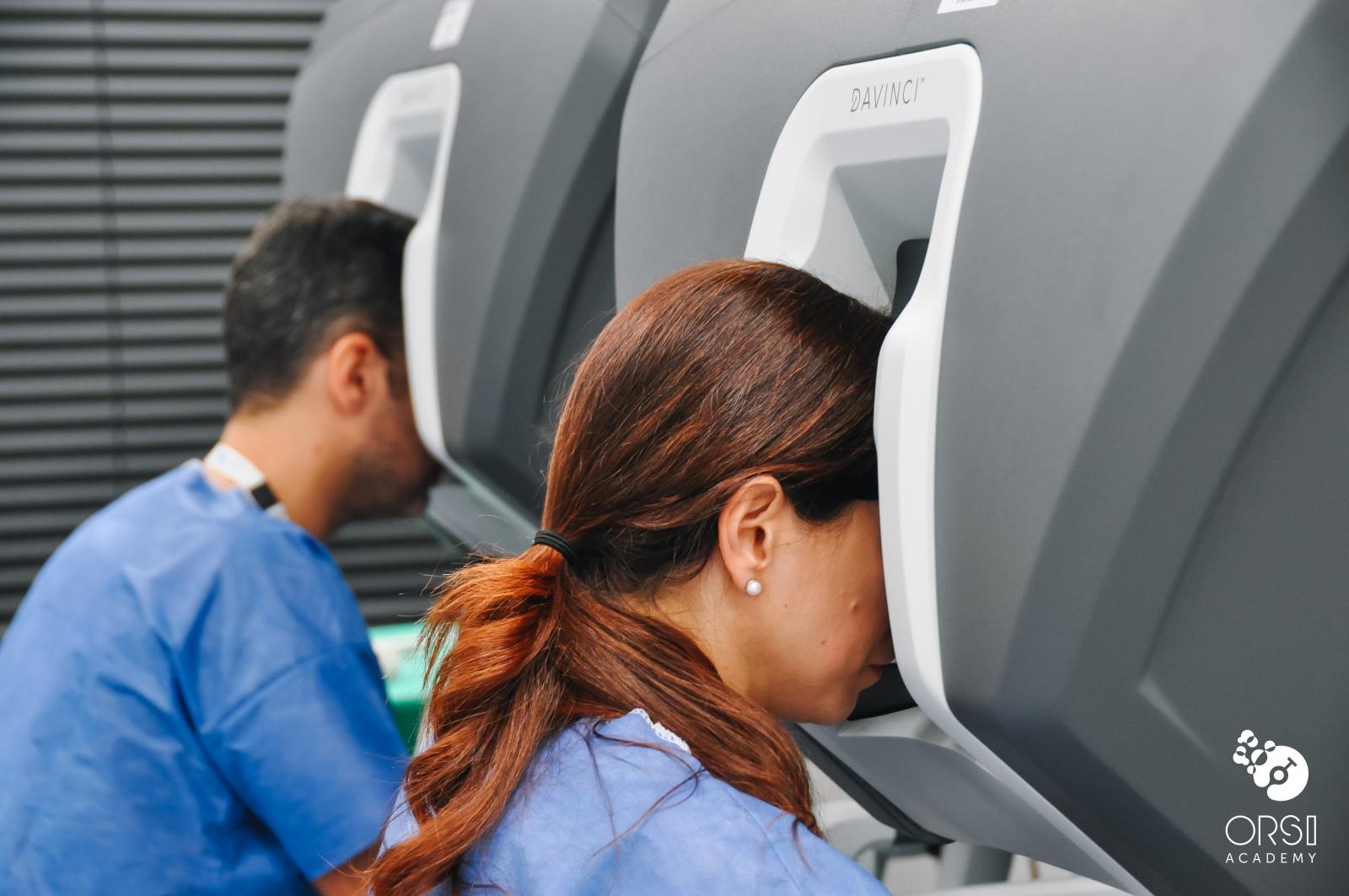
For complex procedures such as pancreatic surgery, access to a robotic platform is not enough. Surgeons need structured training pathways that help them build technical skills, decision-making confidence and procedural understanding step by step.
This is where proficiency-based education becomes essential.
At Orsi Academy, this principle is reflected in robotic general surgery training programmes that combine simulation, hands-on practice, expert guidance and objective assessment. The goal is not simply to train surgeons to use technology, but to help them implement robotic techniques with confidence, structure and a clear focus on patient outcomes.
From innovation to precision care
Looking ahead, Dr. Rashidian also pointed to a broader shift in pancreatic surgery: the move towards precision care.
Surgeons will need to interpret more data, collaborate across disciplines and apply innovation safely in real clinical settings. That makes structured education, objective feedback and proven proficiency more important than ever.
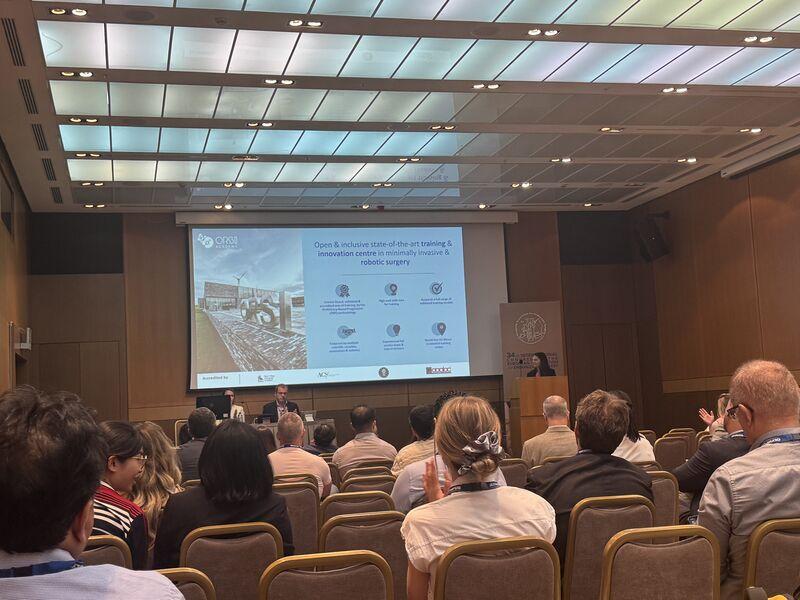
”The future will be increasingly patient-specific, shaped by biology-informed decision-making, multimodal treatment strategies and AI-supported tools. These developments will not replace surgical expertise. They will raise the bar for it.
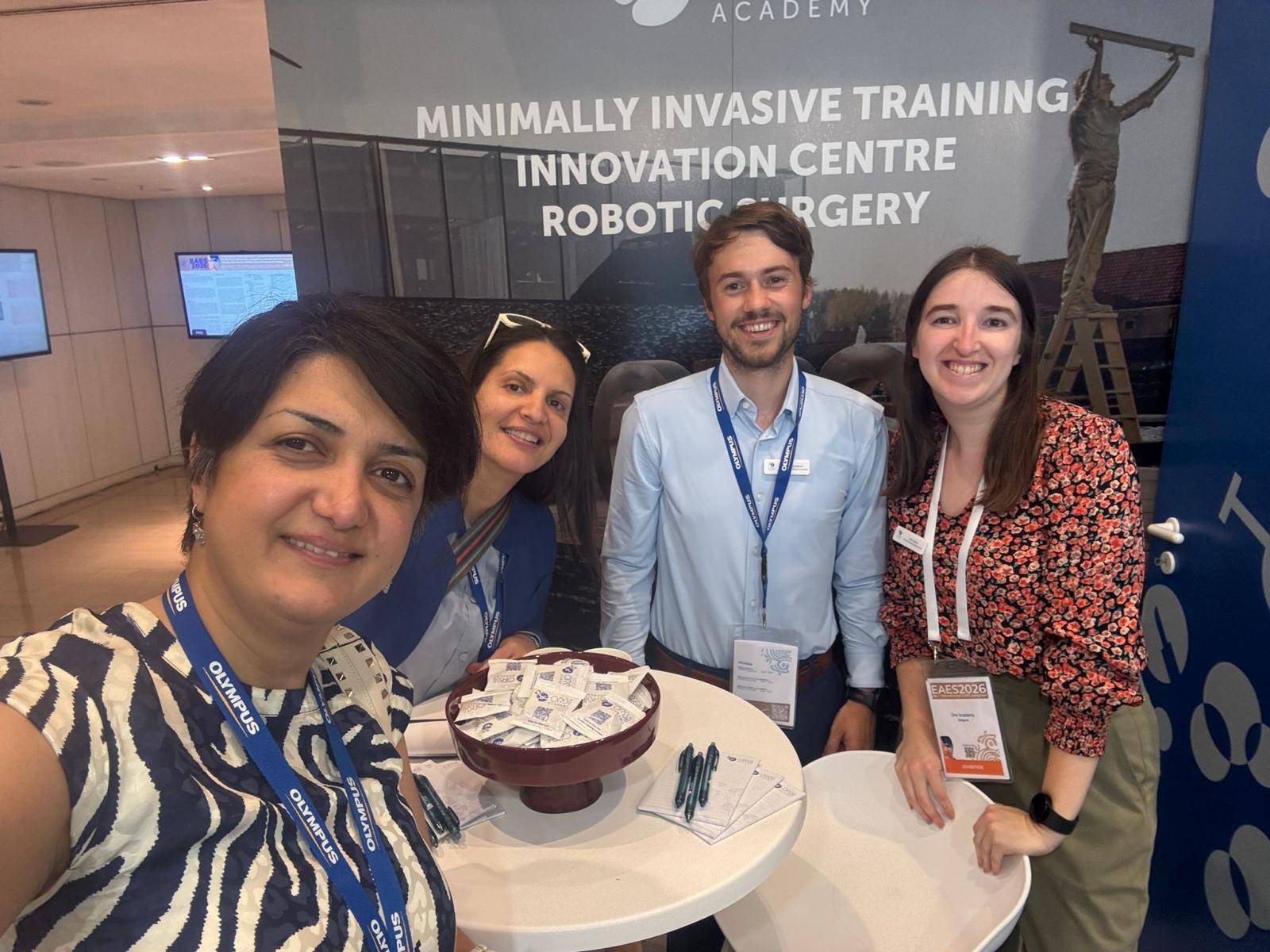
Orsi Academy at EAES
Throughout EAES, the Orsi Academy Education team connected with the international surgical community to discuss training, innovation and the future of robotic surgery.
Our presence at EAES reflects a broader commitment: supporting surgeons and surgical teams as they move from enthusiasm for innovation towards responsible adoption.
Because the future of robotic surgery will not be defined by technology alone. It will be defined by the quality of training, the strength of assessment and the ability to measure outcomes that truly matter.
At Orsi Academy, we are proud to help turn robotic innovation into safer surgical practice.
Continue learning beyond EAES
Explore our robotic general surgery courses and discover how structured, hands-on training can support the safe implementation of robotic techniques in clinical practice.