In this article, we look back at three trends from ERUS26: telesurgery moving beyond a single showcase case, single-port surgery gaining ground as robotic platforms diversify, and AI and advanced imaging moving closer to decisions made during surgery.
The 23rd annual meeting of the EAU Robotic Urology Section (ERUS26) took place in Padua, Italy, from 9 to 11 September 2026, confirming its place as one of the most important scientific gatherings in European robotic urology. The programme featured 11 live surgery blocks, plenaries and educational sessions, alongside technology and innovation forums and more than 500 scientific contributions.
Three trends stood out across the programme: the normalisation of long-distance telesurgery; the rapid diversification of robotic platforms, with single-port systems moving from novelty to routine practice; and the arrival of artificial intelligence and advanced intraoperative imaging as practical tools at the bedside rather than research curiosities. Researchers and surgeons connected to Orsi Academy and AZORG Hospital contributed to each of these developments.
1. Telesurgery is moving from proof of concept to daily practice
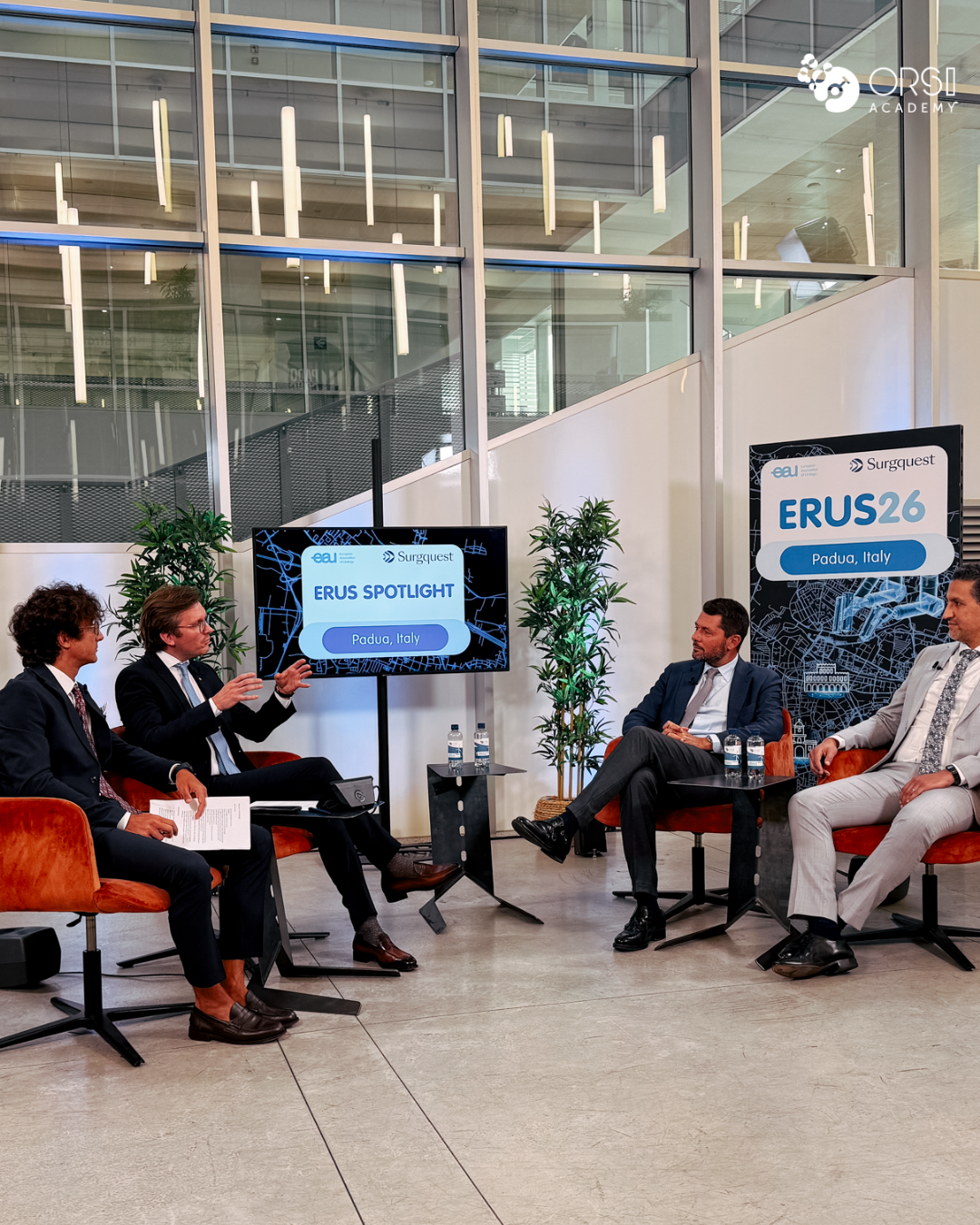
Telesurgery was no longer confined to a single showcase case. Eight remote procedures featured across six live surgery sessions, involving surgeons in Warsaw, Nice, London, New York, Kuwait City, Patras, Aalst and Barcelona.
Research presented at ERUS26 also covered a German multi-platform experience across Europe and other continents, the first live robotic telesurgery in the Americas, the first FDA IDE-approved telesurgical procedure between the USA and Angola, and early clinical outcomes from eleven transcontinental cases based in Kuwait. Taken together, these contributions suggest that connectivity, rather than the robotic arm itself, is now the main variable being engineered.
2. Robotic urology is becoming a multi-platform field
Single-port systems are scaling up
The European Institute of Oncology in Milan presented the meeting’s largest body of single-port work: eight e-posters and videos on radical prostatectomy, covering learning curves and different surgical approaches. A separate European registry is bringing together real-world data from multiple centres.
Single-port technology also featured in a long-distance telesurgical partial nephrectomy series, combining remote operation with a novel single-port system. Across the wider programme, researchers shared experience with several robotic platforms, including da Vinci, Hugo RAS, Versius and Toumai.
3. Artificial intelligence is moving into the surgical workflow
AI research at ERUS26 extended from kidney lesion profiling for surgical planning and classification of bladder images to assessments of clinical evidence and language models for patients with haematuria. A further line of work explored whether AI could recognise anatomy and support decisions while surgery is underway.
Advanced intraoperative imaging: seeing margins in real time
Optical imaging raised a related question: can surgeons assess tissue during an operation? Researchers at the Cleveland Clinic explored real-time margin assessment. An Imperial College London-led study linked positive margins detected by fluorescence confocal microscopy to worse oncological outcomes after robot-assisted radical prostatectomy. These findings suggest a possible role for imaging in decisions made during surgery.

Orsi Academy and AZORG Hospital at ERUS26
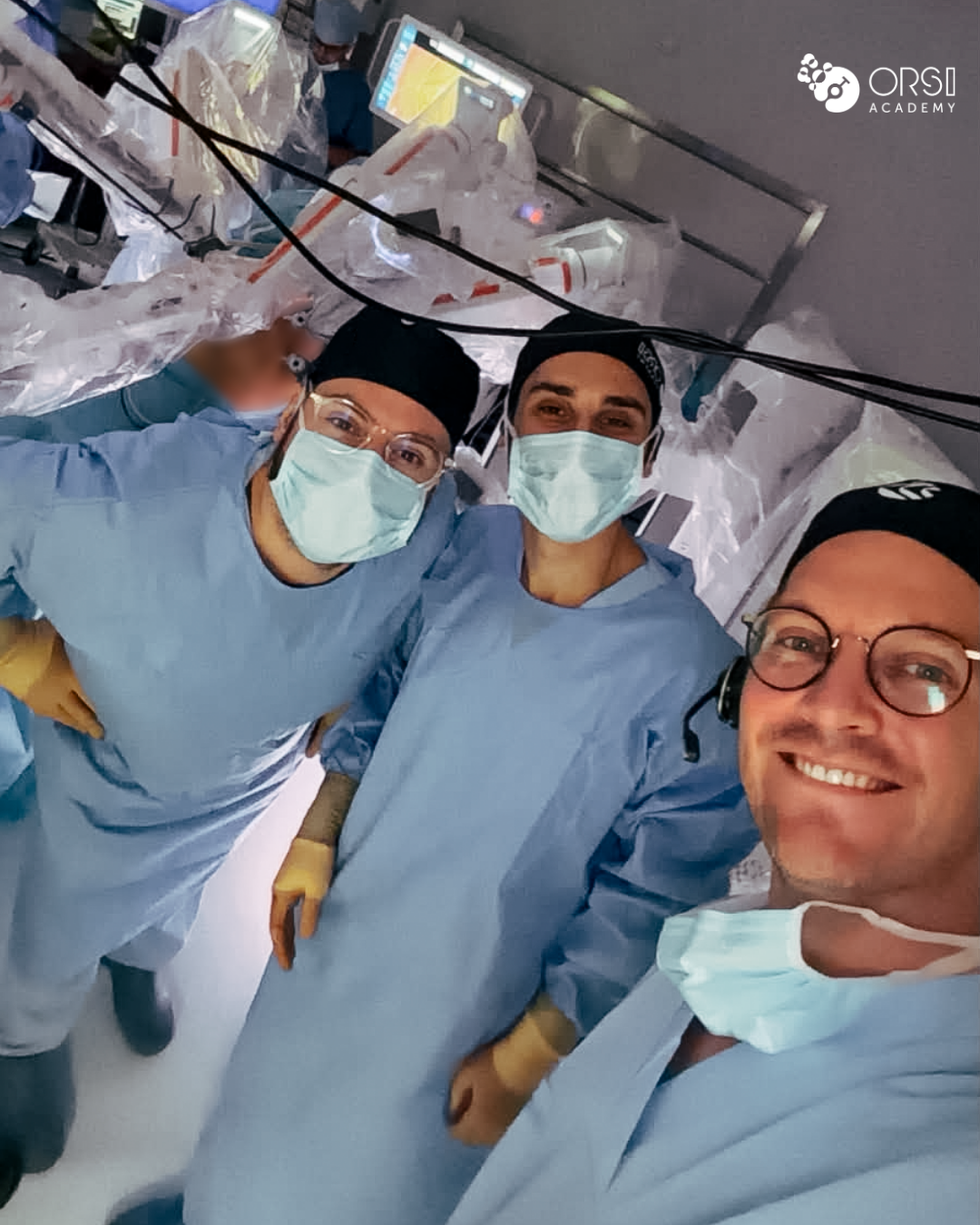
The Aalst group performed three live procedures. Alex Mottrie carried out a partial adrenalectomy for pheochromocytoma combined with an ipsilateral partial nephrectomy. Ruben De Groote demonstrated ureteral reimplantation using a psoas hitch and Boari flap. Among the live cases was Geert De Naeyer’s (AZORG) telesurgical simple prostatectomy combined with diverticulectomy and Edward Lambert who performed a Nerve sparing robot-assisted radical prostatectomy.
A further telesurgery contribution was video VE078, First-in-human telesurgical robot-assisted radical prostatectomy performed via low-earth-orbit satellite using the Toumai® surgical system. It documented the world’s first telesurgical radical prostatectomy over a low-Earth-orbit satellite link. Its co-authors included researchers from the Italian network, among them Beatrici, Cei, Santarelli and Barretta, and collaborators from Orsi Academy and AZORG Hospital, including De Backer, De Groote, Lambert, Mottrie and De Naeyer.
Orsi Academy contributed to the European single-port registry alongside other centres. Researchers in the Orsi Academy–AZORG network also presented clinical experience with Toumai and the SAM3 project, which examined real-time recognition of anatomy in surgical video from da Vinci Xi, Hugo RAS and Toumai systems.
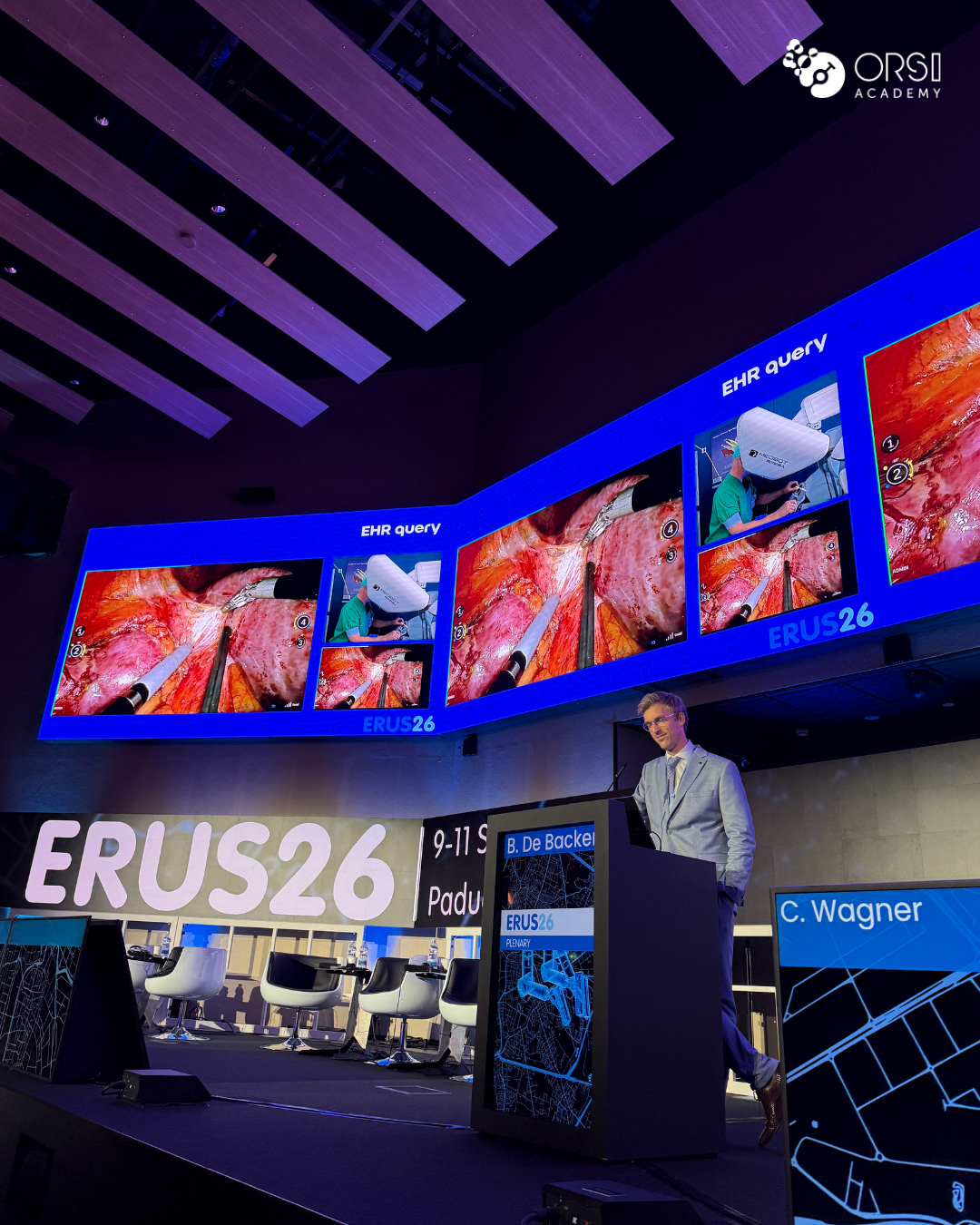
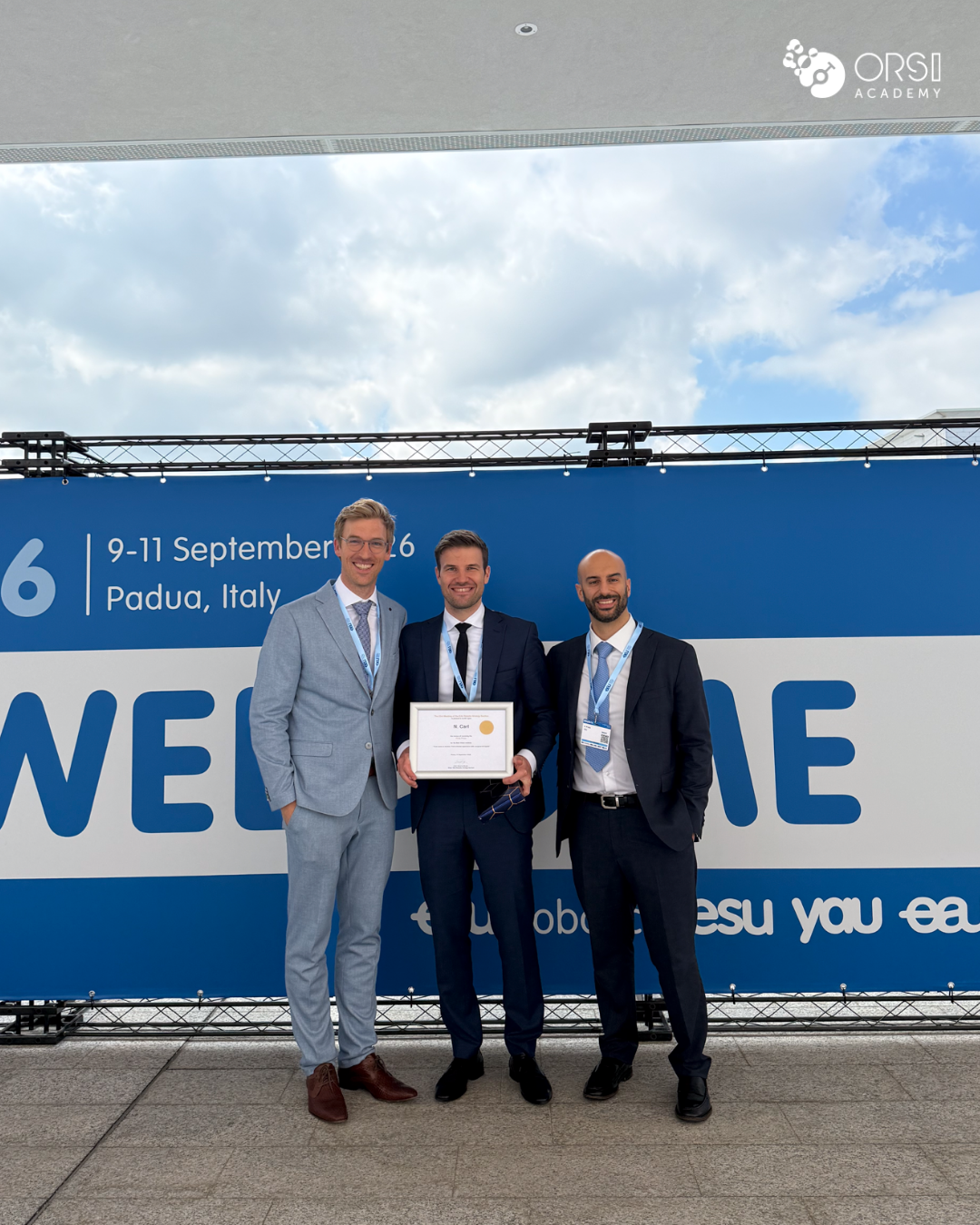
AI innovation received recognition through Mantyx, the first company to emerge from Orsi Innotech. A first-in-human video led by fellow Nicolas Carl showed Mantyx combining patient data, medical imaging and an understanding of the surgical scene during a robot-assisted partial nephrectomy. It won first prize at ERUS26; Pieter De Backer accepted the award on Nicolas Carl’s behalf. In advanced imaging, Alex Mottrie spoke in a plenary session on confocal microscopy in prostate and bladder cancer surgery.
In total, collaboration between the Italian research network and Orsi Academy and AZORG Hospital resulted in more than twenty scientific contributions. Francesco Cei and Valerio Santarelli featured in the Best Poster and Video Awards session, while a project involving Edoardo Beatrici, Calogero Catanzaro and colleagues reached the RUBIC innovation challenge final.
Conclusion
ERUS26 showed a field advancing on several fronts at once: telesurgery across the live programme, growing clinical experience with different robotic platforms, and AI and imaging moving closer to decisions made during surgery. The challenge now is to establish where these developments improve care and how surgical teams can use them safely.